Stackvolve

Proxmox and Ceph delivery for real-world migrations.

We design and execute migrations, platform builds, and recovery engineering — and train your team to operate the open stack when handover matters.

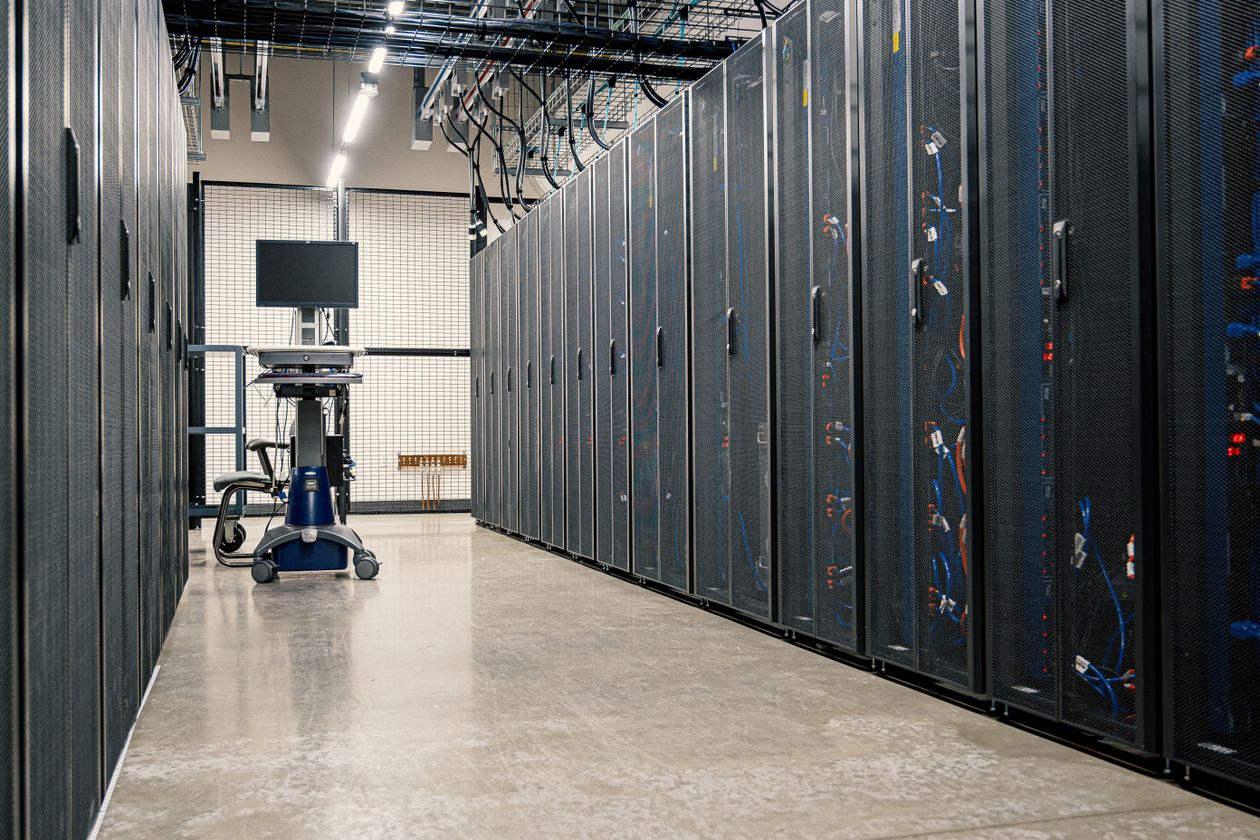
Server racks in a modern data center
Photo: Brett Sayles / Pexels

Open infrastructure capability, built into your team.

Stackvolve Systems designs and delivers migrations from closed hypervisors, proprietary storage, and desktop stacks — with hands-on support from planning through cutover. Most clients reach us when license cost or vendor dependence makes open infrastructure the practical path forward. Where needed, team training is part of handover, so the platform stays operable after we step back.

Remote-first delivery; on-site workshops and cutover support by arrangement. The goal is not only a successful cutover, but long-term operational ownership — your team runs the platform, your data stays under your control, and licensing cost drops as closed subscriptions end.

Business Outcomes & Risk Control

Organizations move from closed, vendor-licensed platforms to open infrastructure to lower cost, keep control of data and operations (digital sovereignty), and build a platform their own team can run. We structure every engagement around those outcomes for leadership.

Lower licensing cost

Closed platforms charge license fees per server, CPU, or storage — and those fees often rise each year. Open platforms such as Proxmox and Ceph remove most of those charges. You invest in hardware and people, not recurring platform subscriptions.

Digital sovereignty

You decide where data is stored, which software versions run, and how the platform is operated. Open infrastructure reduces dependence on one vendor’s license terms, price changes, or product roadmap.

Low-risk execution

Migrations run in planned waves with clear rollback steps. Workloads stay online, user environments stay stable, and each wave is checked before the next begins.

Your team runs the platform

We train your IT staff to operate, monitor, and fix the environment. After handover, day-to-day work stays inside your organization — not on a permanent vendor contract.

Backup you can restore

Recovery uses open, testable backup architecture. Restore drills are part of delivery, so disaster-recovery plans work in practice — not only on paper.

Delivery across compute, storage, and recovery.

Each practice stands alone — or assembles into a full private-cloud exit across compute, storage, and recovery.

Virtualization & desktop

Exit VMware or Hyper-V for Proxmox VE and KVM — including estates where desktop delivery (such as Omnissa VDI) is part of the move, not the whole story.

  • Cluster design, HA, and live migration
  • Legacy hypervisor cutovers with controlled risk
  • Desktop workloads moved with the platform when in scope

Storage

Replace proprietary SAN/NAS lock-in with resilient open fabrics — Ceph at the core when scale, self-healing, and hardware freedom matter.

  • Ceph-backed HCI and dedicated storage pools
  • Migration off closed arrays without dark cutovers
  • Performance and failure-domain planning

Backup & continuity

Move recovery off opaque appliance stacks to open, testable backup and replication you can actually restore from.

  • Backup architecture tied to the new platform
  • Restore drills as part of handover
  • DR patterns that travel with the open stack

Migrations that respect uptime.

We treat the cutover as an engineering program — not a weekend hope. Risk drops when sequence, validation, and ownership are explicit.

  1. 01

    Assess

    Map hosts, storage, network, and desktop delivery. Quantify renewal exposure and cutover constraints.

  2. 02

    Design

    Target architecture on open components — capacity, failure domains, VDI placement, and rollback paths.

  3. 03

    Migrate

    Execute in waves backed by custom orchestration. Keep users productive. Prove each wave before the next — including desktop sessions where VDI is in scope.

  4. 04

    Harden

    Backup, restore drills, monitoring, runbooks, and team handover so the open stack is operable without us in the room.

We build the machinery the cutover needs.

Migrations this size are not done by hand. We run custom orchestration for mass migration, guest preparation, and DR restore — and open-source the pieces that are ready for others to run and inspect.

Mass migration orchestration

Wave-based cutovers from closed hypervisors to Proxmox at fleet scale — disk import, guest readiness, and progress you can operate, not click through by hand.

  • Orchestrated VMware → Proxmox migration waves
  • Guest-agent and Windows readiness in the path
  • Built for estates measured in hundreds of VMs
View on GitHubmigration-engine

Guest OS / sysprep tooling

Template → clone → sysprep pipelines for desktop and server identity — including Win11-style VDI pools where every clone must be unique and joinable at speed.

  • Bulk desktop and server identity preparation
  • VDI-scale clone waves without manual sysprep theater
  • Fits Omnissa and other desktop delivery layers on open compute
View on GitHubproxmox-guestos-customization

DR / bulk restore orchestration

PBS → PVE restore engines for recovery drills and disaster paths — multi-source restores, tagged groups, and live restore patterns you can rehearse before you need them.

  • Bulk restore from Proxmox Backup Server
  • Grouped and prioritized recovery paths
  • Designed for drills as much as real incidents
View on GitHubrestore-engine

Environment-specific tooling when your estate doesn’t fit a generic playbook. We open-source what is ready to run; bespoke orchestration when your estate needs it.

600 VMs off VMware — onto Proxmox and Ceph.

For a 1,000-user organization we moved the core estate from VMware to Proxmox VE backed by Ceph — a confidential engagement. That included server workloads and, as one stream of the same program, desktop delivery that stayed on Omnissa VDI while the hypervisor underneath changed. Custom migration and guest prep tooling carried the waves.

Infrastructure

Full architectural transition: ESXi cluster teardown, VirtIO injection, Ceph-backed HCI, and a sequenced, wave-based cutover designed to keep disruption bounded and reversible.

Also in scope: end user

Part of the estate ran Omnissa VDI. Those desktops were not a separate project — they moved with the platform. Omnissa stayed as the desktop layer; Proxmox and Ceph became the compute and storage underneath.
Team training as part of delivery.

Hands-on training for Proxmox and Ceph is available as part of migration and delivery engagements — so your team can operate the platform after cutover.

Proxmox Administrator Training

Operational training for IT teams that need to deploy, run, and troubleshoot production Proxmox VE clusters.

  • Cluster architecture, HA, networking, and storage mapping
  • Operational runbooks, monitoring, and incident handling
  • Hands-on labs tailored to your team’s environment

Ceph Operations Training

Practical Ceph training focused on healthy day-2 operations, performance awareness, and recovery discipline.

  • CRUSH design, failure domains, and capacity planning
  • Alert response, OSD lifecycle, and maintenance windows
  • Troubleshooting drills for degraded and recovery states

Migration Readiness Workshop

Training plus planning for organizations preparing to leave closed stacks and execute controlled migration waves.

  • VMware and proprietary stack exit strategy
  • Pilot design and validation criteria
  • Execution readiness checklist for production rollout

Let’s map your migration and delivery plan.

Book a free one-hour technical discovery call. We’ll review your current setup, constraints, and goals, then define the right mix of migration support, implementation help, and knowledge transfer.

Discovery call

One hour. No slides. Real scope.

Discovery is a free one-hour scope call. Training and delivery are quoted after we understand your environment — no obligation from the call itself.

Book a discovery call

Prefer writing?